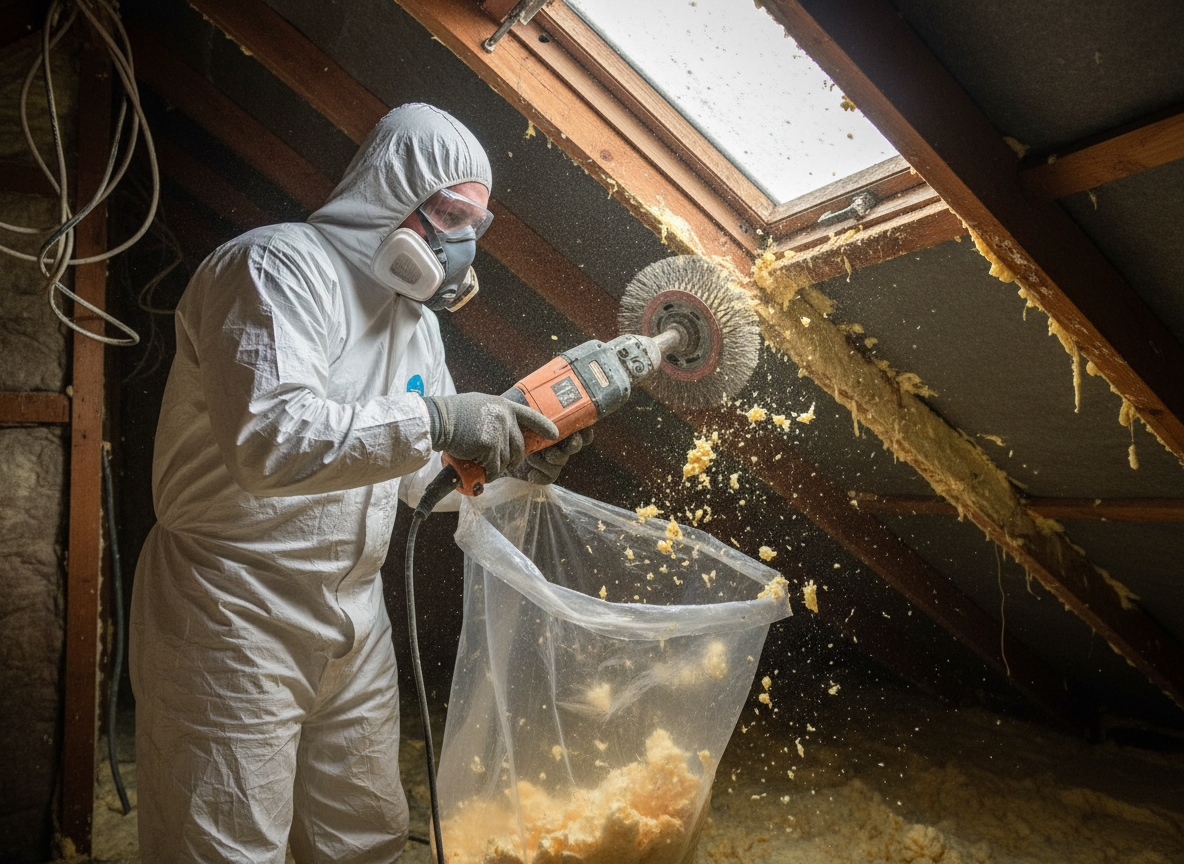
Weston Super Mare's older terraced and semi-detached homes, many built before the 1930s along roads near the seafront, often received spray foam insulation in lofts during the 2000s push for energy efficiency. The foam bonds tightly to rafters and joists but traps moisture from the area's frequent coastal mists and high humidity, leading to hidden rot that only appears once ceilings start to stain. Removal requires section-by-section cutting and vacuum extraction to avoid disturbing original lath and plaster below, especially in properties around Clarence Rd N where narrow access hatches limit equipment size.
Bristol Channel winds drive salt spray inland, which corrodes metal fixings once the foam is gone and leaves timber surfaces needing treatment before any new insulation goes in. Local homeowners frequently discover the foam has bridged ventilation gaps at eaves, so we restore airflow using soffit vents suited to the exposed location rather than standard plastic types that fail quickly here. Work stops if we hit asbestos insulation boards common in 1950s-60s extensions, requiring licensed handover before continuing.
The process accounts for seasonal rain patterns that can saturate lofts through slipped tiles on pitched roofs typical of Weston Super Mare terraces. We use negative-pressure containment to keep dust from migrating into living spaces below, then bag all waste for licensed disposal. Post-removal checks include moisture meter readings on every joist because the clay-heavy soil and poor drainage in lower-lying streets around the town keep relative humidity high even in summer.
Technician insight
In Weston Super Mare, the thing that catches most people out with loft spray foam removal is how salt air from the Bristol Channel has already started eating into nail plates and joist ends once the foam comes off, especially on pre-war terraces near the promenade where roofs get direct wind exposure.
Clarence Road Loft Strip
A homeowner on Clarence Rd N reported ceiling stains after heavy winter rain. Inspection showed spray foam holding moisture against rafters in a 1920s terrace. We removed the foam in sections, restored eaves airflow, and left the space ventilated so the timber could dry without further rot.
How it works
- 1
Site Inspection
Access the loft via existing hatch, assess foam depth, timber condition, and any signs of prior damp staining while noting proximity to the seafront for salt exposure.
- 2
Containment Setup
Install dust barriers and negative air units to isolate the workspace, protecting rooms below in compact Weston Super Mare terraces where lofts sit directly above bedrooms.
- 3
Foam Extraction
Cut and peel foam in manageable sections, vacuum residues from rafters, and treat exposed timber for mould before restoring eaves ventilation.
- 4
Clearance and Handover
Remove all debris, dispose of waste per local regulations, and provide a written report on loft condition for the homeowner's records.
Pricing
Inspection-based quotes reflect loft size, foam thickness, and access constraints common in Weston Super Mare's older housing.