2026-10-22 ·
How to Spot Spray Foam Issues in Weston Super Mare Lofts
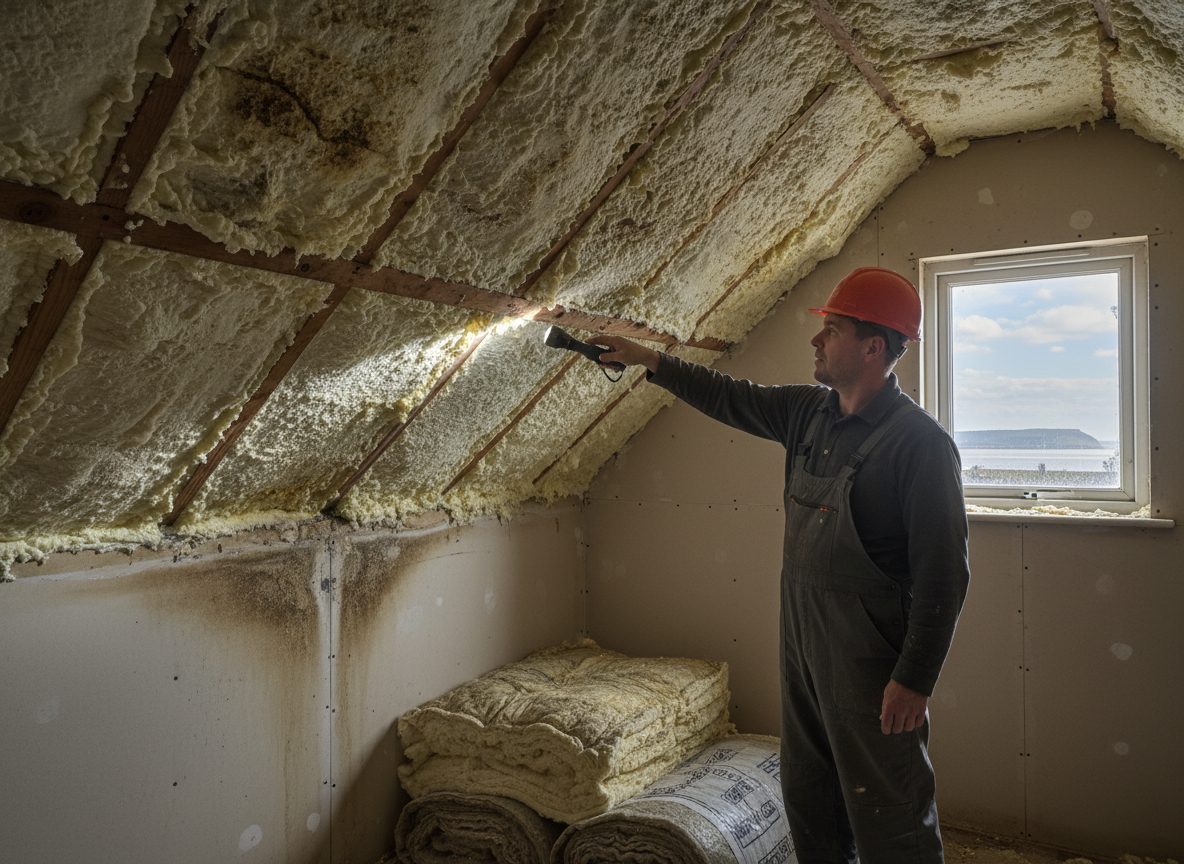
Spray foam in Weston Super Mare lofts typically reveals problems through sagging sections, dark moisture patches and reduced loft ventilation within 8–15 years of installation, especially in homes built before 1970 near the coast.
Visible Surface Changes
In Weston Super Mare properties, spray foam often pulls away from rafters in older Victorian terraces around Clarence Road and the seafront. Check for yellowing or crumbling edges where closed cell foam meets timber. These signs appear faster in lofts exposed to salt air carried inland from the Bristol Channel. Walk the full length of the loft boards and note any areas where the foam surface feels soft or flakes when pressed. Properties in nearby Clevedon show similar patterns due to shared exposure. Early detection prevents insulation from blocking roof vents and causing condensation on ceilings below.
Moisture and Condensation Patterns
Somerset winters bring frequent rain and high humidity that accelerates foam breakdown in Weston Super Mare lofts. Look for dark streaks running down rafters or water marks on the foam itself after heavy downpours. Coastal properties experience more rapid moisture retention because salt in the air corrodes the foam skin over time. Measure humidity with a simple meter during winter months when temperatures drop below 5°C. Persistent damp spots often trace back to failed foam seals around chimney stacks or vent pipes common in local housing stock. Local considerations when removing spray foam near the Weston Super Mare coast explains how these conditions differ from inland Somerset homes.
Airflow and Temperature Issues
Homeowners in Weston Super Mare notice uneven temperatures between floors when spray foam loses adhesion and allows drafts. Test by holding a hand near the loft hatch on cold mornings. Warm air escaping upward indicates gaps where foam has shrunk or detached from the roof deck. In summer, lofts that once stayed cooler now feel stifling because the foam no longer blocks heat from the tiles. These changes show clearly in homes around the town centre and toward Highbridge where older pitched roofs predominate. Consistent monitoring helps owners decide when professional assessment is needed before issues reach the living spaces.
When Professional Inspection Becomes Necessary
Schedule an insulation assessment once any of the above signs appear in your Weston Super Mare loft. Technicians can confirm whether the foam requires full removal through loft spray foam removal before it affects timber or plaster. The 24/7 team based at 7-9 Clarence Rd N responds quickly to calls from properties across the BS23 postcode. Delaying action often leads to larger jobs involving both insulation extraction and roof repairs in coastal Somerset homes.
Practical Next Steps for Weston Super Mare Homeowners
Document any observed changes with dated photos from multiple angles before contacting removal specialists. Compare conditions in your loft against neighbouring properties in Portishead or Burnham on Sea to gauge if the issue is widespread. Keep records of temperature differences and any musty smells noticed during routine checks. These details help crews plan the safest removal method suited to local roof constructions and weather exposure.